What is experiential learning in corporate training?
A clear definition of experiential learning in corporate training, how it differs from classroom training, when it works best and what HR teams should look for.
Key takeaways
- Experiential learning means learning through doing, then reflecting on what happened and deciding how to apply it.
- It is most useful for behavioural capabilities — leadership, communication, collaboration and emotional intelligence.
- The debrief is where learning happens; an activity without reflection is just an activity.
- Good experiential programmes are designed backwards from the workplace behaviour the organisation wants to see.
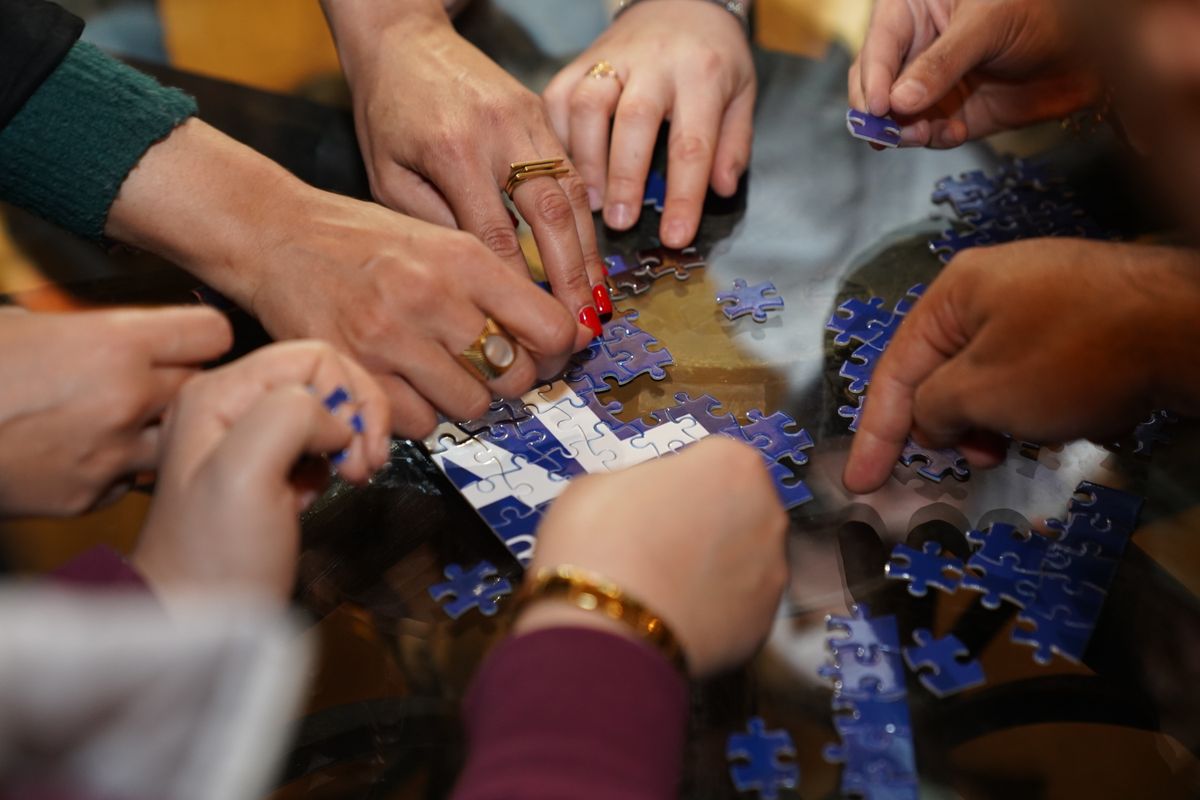
Experiential learning in corporate training is an approach in which employees learn by taking part in a structured experience — a simulation, role play, team challenge or reflective exercise — and then making sense of it through facilitated reflection, so they can apply the insight at work. It moves learning from listening to doing.
A simple definition
The idea is most closely associated with the educational theorist David Kolb, whose 1984 book Experiential Learning: Experience as the Source of Learning and Development described learning as a cycle: a concrete experience, reflection on that experience, forming ideas from it, and testing those ideas in new situations.
In a corporate setting, that cycle translates into something practical. Participants are put into a situation that resembles real work. They act, and notice how they acted. A facilitator helps them understand what happened and why. They then decide what they will do differently — and ideally try it again before leaving the room.
At Kraft Connect we describe this as five stages: Feel, Test, Practise, Reflect, Apply.
Why it matters for behavioural skills
Most of the capabilities organisations struggle with are behavioural, not informational. Managers usually know they should delegate. Teams usually know silos are a problem. People usually know that feedback should be specific and timely.
The gap is not knowledge; it is behaviour under real conditions — when there is time pressure, when emotions are involved, when a conversation feels risky. Behaviour of that kind is shaped by practice and reflection far more than by explanation. That is why leadership, communication, collaboration, emotional intelligence and resilience are natural territory for experiential learning.
What an experiential session actually looks like
A well-designed experiential session has a clear arc:
- An experience. For example, a team challenge that can only be solved if different groups share information — mirroring how cross-functional work actually depends on collaboration.
- Observation. Participants and facilitators notice what happened: who took charge, what information got stuck, where assumptions were made.
- Facilitated reflection. The debrief connects the experience to work. Where does this happen in our organisation? What did it cost? What helped?
- Practice. Participants try a different approach — a second round, a role-played conversation, a rehearsal.
- Application. Each person leaves with a specific commitment for the following week.
Formats vary widely. They can include role play and workplace simulations, storytelling, creative expression such as collaborative art, rhythm and movement, build challenges, mindful reflection and nature-based sessions. What matters is not the format itself but whether it has a clear learning purpose.
Every format needs a purpose
The most common failure in experiential learning is choosing an activity because it is fun, then trying to attach a lesson afterwards. The result feels like entertainment, and participants can tell.
Strong programmes work the other way round. They start with the behaviour the organisation wants to see — clearer delegation, earlier conflict resolution, more candid feedback — and then choose the experience most likely to surface and build it. A drumming circle might be chosen to explore synchronisation and listening in a team; a role play to rehearse a difficult conversation; a build challenge to make cross-team dependencies visible.
The debrief is where learning happens
An activity without reflection is just an activity. The quality of experiential learning depends heavily on the facilitator's ability to run a debrief: asking questions that help participants notice their own behaviour, connecting it to real work situations, keeping the conversation safe and honest, and moving the group from insight to commitment.
When HR teams evaluate experiential programmes, it is worth asking specifically how debriefs are structured and how much time they are given.
Where experiential learning fits — and where it does not
Experiential learning is not the answer to every learning need. It is well suited to:
- Leadership and management development
- Communication, feedback and difficult conversations
- Team effectiveness, trust and collaboration
- Emotional intelligence and self-awareness
- Resilience and well-being practices
- Culture and values work
It is usually less suited, on its own, to knowledge-heavy topics such as technical procedures, product knowledge or compliance, where clear instruction and assessment are more efficient. Many good programmes combine both.
What HR and L&D teams should look for
When choosing an experiential learning partner, useful questions include:
- How do you start? Look for a discovery conversation about your context, not an immediate catalogue recommendation.
- What behaviour is this designed to change? Each activity should have a stated learning purpose.
- How are debriefs run? Reflection should take meaningful time, not five minutes at the end.
- What happens after the session? Action commitments, manager briefings and follow-ups help learning transfer.
- How will we know it worked? Measures should match the depth of the engagement — from participant feedback to agreed behavioural indicators.
- Where are the boundaries? Well-being and reflective formats should be clearly positioned as learning, not therapy.
The bottom line
People rarely remember another presentation. They remember what they experienced. Experiential learning uses that fact deliberately: it gives people a safe place to feel a situation, test a new behaviour, practise it, reflect on it and apply it — so the change starts in the room and continues at work.
Topics covered
- experiential learning
- corporate training
- learning by doing
- reflection
- behaviour change
Frequently asked questions
No. Team building often focuses on the activity and the shared experience. Experiential learning uses activities as a means to an end: every experience is chosen for a learning purpose and followed by facilitated reflection and application.
Not entirely. Knowledge-heavy topics such as compliance or technical procedures can be taught effectively through instruction. Experiential learning is strongest where the goal is behaviour change.
A focused 90–120 minute workshop can shift one specific behaviour. Deeper change usually benefits from a half-day or full-day programme, or a journey with follow-up between sessions.
Kraft Connect perspective
From learning design to business context.
This insight sits at the intersection of experiential learning and workplace application. Explore the people behind Kraft Connect for the facilitation and organisational perspectives that shape its programmes.
Kraft Connect's editorial team develops practical learning and development guidance from its experiential methodology and programme design work. The team works alongside founders Ishu Sharma and Sartaj Singh Mangat.