How can organisations build a practical leadership development journey?
A practical framework for HR and L&D teams designing leadership development across emerging leaders, managers and senior professionals.
Key takeaways
- Leadership development works better as a journey when participants need repeated practice and reflection.
- Different leadership populations need different experiences and levels of challenge.
- Self-awareness, relationships, communication and action need to connect rather than sit in separate modules.
- Business sponsors should agree the behaviours and outcomes the journey is designed to strengthen.
A practical leadership development journey connects self-awareness, relationships, communication and action over time. Instead of treating leadership as a list of topics, it gives participants repeated opportunities to experience, practise, reflect and apply the behaviours their role requires.
Begin with the leadership population
A first-time manager is dealing with a different transition from an experienced business leader. Emerging leaders may be learning how to influence without formal authority, while senior leaders may need alignment, communication and culture work.
Start by defining who the journey is for and what has changed in their role.
Define the behaviours
Avoid beginning with a catalogue of training topics. Instead ask:
- What should leaders do differently?
- What conversations should become easier?
- What should teams experience differently from their leaders?
- What organisational priority does the development support?
Those answers can shape the learning architecture.
Connect individual, team and organisation
The KRAFT Method™ moves from Know Yourself and Relate Better to Act Intentionally, Flourish Together and Transform Continuously. This provides a useful progression from individual awareness to relationships, action and wider impact.
The exact sequence can be adapted to the organisation and audience.
Build practice between sessions
Leadership behaviour develops through use. A journey can therefore alternate between facilitated learning, workplace experiments, reflection and follow-up conversations.
For example, a manager may practise delegation in a workshop, use it with their team during the following week, reflect on what happened and return to the group to troubleshoot and practise again.
Use experiential learning where behaviour matters
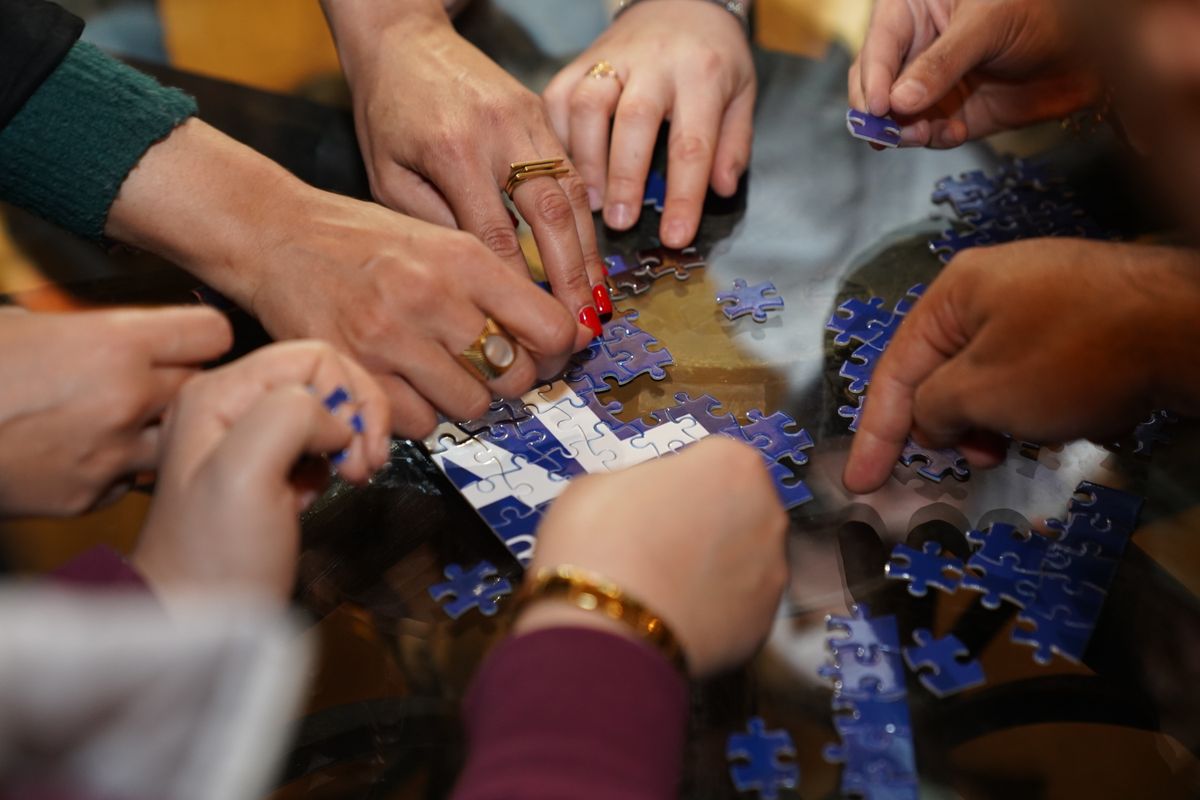
Role play, simulations, storytelling, team challenges and facilitated reflection can make leadership behaviour visible. Participants can experience pressure, notice default responses and test alternatives in a structured environment.
The activity should always have a learning purpose and a clear bridge back to work.
Make reinforcement visible
A leadership journey should not end when the final slide ends. HR and business sponsors can reinforce it through manager conversations, peer learning, action commitments and agreed measures.
The most useful journey is therefore not the one with the most modules. It is the one that gives leaders enough relevant practice, reflection and reinforcement to change what they do at work.
Topics covered
- leadership development
- leadership journey
- emerging leaders
- manager development
- leadership training
Frequently asked questions
Both can be appropriate. A focused programme can address a defined need; a journey is useful when participants need repeated practice, reflection and reinforcement over time.
Some shared experiences can be valuable, but content and practice should reflect the participants' role, context and level of responsibility.
Depending on the need, it can include self-awareness, communication, relationships, decision-making, ownership, feedback, collaboration and leading through change.
Kraft Connect perspective
From learning design to business context.
This insight sits at the intersection of experiential learning and workplace application. Explore the people behind Kraft Connect for the facilitation and organisational perspectives that shape its programmes.
Kraft Connect's editorial team develops practical learning and development guidance from its experiential methodology and programme design work. The team works alongside founders Ishu Sharma and Sartaj Singh Mangat.